

The Future of Consumer Technology
How Innovation Is Accelerating

Technology rarely moves in a straight line. It leaps. One breakthrough inspires another, industries overlap, and what seemed impossible a few years ago suddenly becomes part of everyday life. That rapid acceleration is exactly why conversations around future gadgets 2030 are becoming more exciting every year.
In the past, major consumer technologies often took decades to move from research labs into homes. Smartphones, wireless internet, and voice assistants all followed long development cycles. Today, artificial intelligence, robotics, quantum computing, advanced batteries, and spatial computing are dramatically shortening that timeline. The devices being prototyped right now could shape the way we live, work, travel, learn, and communicate before this decade ends.
One major reason future gadgets 2030 are evolving so quickly is cross-industry collaboration. Healthcare companies now work with AI developers. Automotive manufacturers partner with robotics experts. Consumer electronics brands invest heavily in machine learning, sensors, and augmented reality. This blending of expertise creates faster breakthroughs and smarter products.
Another major driver is consumer demand. People no longer want gadgets that simply entertain them—they want devices that save time, improve health, increase productivity, reduce energy waste, and make life feel more intuitive. This demand is pushing innovation toward more personalized, predictive, and autonomous technology.
Cloud computing also plays a major role. Devices no longer need all processing power built inside. Instead, many future gadgets 2030 will rely on powerful cloud systems, edge computing, and AI assistants that continuously learn user preferences.
The result is a future where technology becomes less visible, more intelligent, and deeply integrated into everyday life.
Why Future Gadgets Matter

It’s easy to think of technology as entertainment or convenience, but the real value of future gadgets 2030 goes much deeper. These devices may influence how we manage health, protect homes, travel through cities, communicate across languages, and interact with digital environments.
One of the biggest reasons future gadgets 2030 matter is accessibility. Technology is increasingly being designed to help people live more independently. Voice interfaces, AI assistants, biometric monitoring, and adaptive automation may help seniors, people with disabilities, and busy families navigate daily life with greater ease.
Health is another major area of impact. Wearables, diagnostic sensors, and predictive health monitoring may help detect issues before symptoms appear. Instead of reacting to illness, future devices could support preventive care.
Sustainability also matters. Many future gadgets 2030 are expected to focus on energy efficiency, battery innovation, waste reduction, and smarter resource management.
Education and communication could also change dramatically. Real-time translation, immersive learning, and spatial collaboration tools may make global communication feel more natural than ever.
At their best, future gadgets 2030 won’t simply add features—they may fundamentally improve how people live.
Wearable Technology in 2030
Smart Glasses and Augmented Reality

Wearable displays are expected to become one of the most exciting technology shifts of the next decade, and smart glasses may lead that transformation. Instead of constantly looking down at phones, users may soon access digital information directly within their field of vision, creating a more natural and hands-free way to interact with technology.
One of the most promising applications of future gadgets 2030 in this category is real-time information overlay. Smart glasses may display navigation directions, incoming messages, calendars, notifications, live translation, health data, or work instructions directly onto the physical world without interrupting daily activities.
Augmented reality could also transform education, professional training, healthcare, retail, and entertainment. Students may explore interactive 3D lessons, engineers could view repair instructions while working, and travelers may receive instant translations while exploring new places.
Artificial intelligence will likely make these devices even smarter by recognizing objects, identifying landmarks, offering contextual suggestions, and adapting information based on user behavior.
Design improvements will also play a major role. Future models are expected to become lighter, more stylish, and far more comfortable for all-day use, with improved battery life and high-resolution displays.
As digital experiences become more immersive and less screen-dependent, smart glasses may become one of the most practical and visible innovations shaping everyday life in the next decade.
AI-Powered Health Wearables

Personal health technology is evolving far beyond basic fitness tracking, and wearable devices are expected to play a major role in the next generation of connected living. By 2030, intelligent wearables may become smaller, more accurate, and far more useful in everyday health management.
One of the most exciting possibilities of future gadgets 2030 in this category is continuous health awareness. Instead of simply counting steps or measuring heart rate, advanced wearables may monitor hydration, blood oxygen levels, sleep quality, stress patterns, glucose trends, body temperature, respiratory activity, and cardiovascular performance in real time.
Artificial intelligence adds another powerful layer. These devices may analyze long-term health patterns, recognize unusual changes, and provide personalized recommendations based on individual habits, activity levels, and medical history. This could help users identify potential health concerns earlier and make better lifestyle decisions.
Many wearable systems may also connect directly with healthcare apps, fitness platforms, telemedicine services, or emergency contacts. If unusual readings are detected, alerts could be shared automatically with trusted professionals or family members.
Comfort and design will likely improve as well, with sensors built into watches, rings, clothing, earbuds, or even skin-friendly wearable patches.
As healthcare becomes more proactive and personalized, AI-driven wearables could become an essential part of how people monitor wellness, prevent illness, and stay connected to their health every day.
Brain-Computer Interface Devices
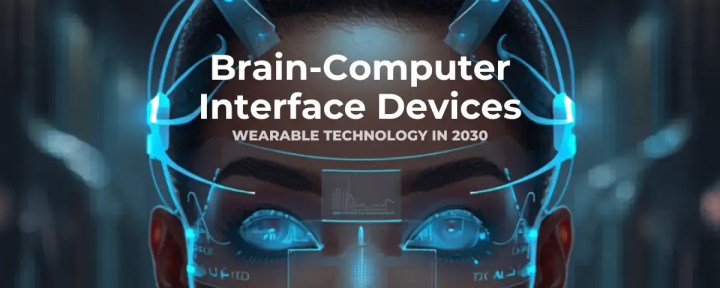
Among the most ambitious future gadgets 2030, brain-computer interface technology could completely redefine how humans interact with machines. Instead of using keyboards, touchscreens, or voice commands, future gadgets 2030 in this category may allow users to control digital systems directly through neural activity.
One of the most exciting possibilities of these future gadgets 2030 is hands-free communication. Specialized sensors may detect brain signals and translate them into commands for computers, smart devices, robotic systems, or communication tools. This could make future gadgets 2030 incredibly valuable for accessibility, rehabilitation, and assistive technology.
Medical applications may become one of the biggest breakthroughs. Future gadgets 2030 based on brain-computer interfaces could help individuals with mobility challenges control prosthetic limbs, wheelchairs, communication systems, or home automation tools using only thought-based interaction.
Artificial intelligence may make these future gadgets 2030 even smarter by improving signal interpretation, learning user behavior, and adapting to individual neurological patterns over time.
Researchers are also exploring entertainment, gaming, education, and productivity applications. Future versions of future gadgets 2030 could enable immersive digital experiences controlled through cognitive input rather than physical movement.
Although brain-computer interfaces are still developing, rapid progress in neuroscience, AI, and wearable sensors suggests that future gadgets 2030 in this category could become some of the most transformative technologies of the next decade.
Smart Home Gadgets of 2030
Fully Automated Home Assistants

Home automation is expected to become far more intelligent through future gadgets 2030, and fully automated assistants may become the center of connected living. Unlike today’s voice assistants that mostly wait for commands, future gadgets 2030 in this category could actively learn routines, predict needs, and manage daily tasks without constant user input.
One of the biggest advantages of these future gadgets 2030 is predictive behavior. Advanced home assistants may study sleeping patterns, work schedules, lighting preferences, climate habits, entertainment choices, and appliance usage. Using artificial intelligence, future gadgets 2030 could automatically adjust your environment before you even ask.
For example, these future gadgets 2030 may open smart blinds in the morning, start coffee machines, adjust room temperature, play personalized news updates, and prepare workspaces based on your calendar.
Security and energy management may also become part of these future gadgets 2030. Home assistants could lock doors automatically, monitor unusual activity, reduce standby power usage, and optimize energy consumption throughout the day.
Many future gadgets 2030 may integrate with cameras, sensors, smart appliances, entertainment systems, wearable devices, and health monitoring tools to create a fully connected ecosystem.
As artificial intelligence continues to improve, future gadgets 2030 focused on automated home assistants may transform houses into responsive environments that feel more personalized, efficient, and intuitive than ever before.
Predictive Climate and Energy Systems

Energy management is expected to become much smarter through future gadgets 2030, and predictive climate systems may completely change how homes control comfort and efficiency. Instead of waiting for manual adjustments, future gadgets 2030 in this category could automatically analyze environmental conditions, personal routines, and energy usage to create the ideal indoor experience.
One of the biggest advantages of these future gadgets 2030 is predictive learning. Advanced climate systems may study occupancy patterns, weather forecasts, sunlight exposure, room usage, and personal temperature preferences. Using this data, future gadgets 2030 could adjust heating, cooling, ventilation, and humidity levels before users even notice a change.
Artificial intelligence makes these future gadgets 2030 even more powerful. AI-driven systems may identify energy waste, recommend efficiency improvements, and automatically optimize appliance usage based on electricity pricing or seasonal conditions.
Many future gadgets 2030 may also work with smart blinds, solar panels, battery storage, window sensors, and connected appliances to create a fully synchronized home energy ecosystem.
Remote monitoring and mobile controls could give homeowners even greater flexibility, while real-time analytics may provide detailed energy reports.
As sustainability becomes increasingly important, future gadgets 2030 focused on climate automation may help reduce energy costs, lower environmental impact, and create healthier, more comfortable living spaces with minimal manual effort.
Autonomous Home Security

Home protection is expected to become far more intelligent with the rise of future gadgets 2030, and autonomous security systems may become one of the most important upgrades for connected living. Instead of simply recording activity or sending basic alerts, future gadgets 2030 in home security could actively analyze situations, recognize patterns, and respond automatically when unusual activity is detected.
One of the biggest advantages of these future gadgets 2030 is intelligent awareness. Advanced cameras, sensors, and AI-powered monitoring systems may recognize familiar faces, identify authorized visitors, detect suspicious movement, and distinguish between people, pets, vehicles, or environmental changes. This could dramatically reduce false alarms while making future gadgets 2030 far more reliable.
Automation adds another major benefit. When unusual activity is detected, future gadgets 2030 may automatically lock doors, activate outdoor lighting, start video recording, notify homeowners, or even contact emergency services if necessary.
Cloud-based learning could make these future gadgets 2030 smarter over time. By analyzing daily routines, visitor patterns, and household activity, security systems may become increasingly personalized and accurate.
Many future gadgets 2030 may also integrate with voice assistants, smart locks, climate systems, and other connected devices for full-home automation.
As artificial intelligence continues to evolve, future gadgets 2030 focused on autonomous security may deliver faster responses, stronger protection, and greater peace of mind for modern homes.
Personal Mobility and Transportation Gadgets
Smart Electric Micro-Vehicles

Urban transportation is already changing, and by the end of this decade, compact mobility solutions could become some of the most practical future gadgets 2030. As cities become more crowded and sustainability becomes a bigger priority, lightweight electric transportation may play a major role in everyday commuting.
Electric scooters, folding e-bikes, compact personal pods, and AI-assisted mobility devices are expected to evolve far beyond what we see today. Many future gadgets 2030 in this category may include self-balancing technology, adaptive speed controls, collision detection, biometric unlocking, and predictive navigation.
Battery technology will likely be one of the biggest breakthroughs. Future micro-vehicles may charge faster, travel farther, and use lightweight solid-state batteries that improve safety and efficiency. Some future gadgets 2030 could even support wireless charging through smart parking stations or connected urban infrastructure.
AI integration may also change how people move through cities. Navigation systems could automatically choose safer routes, avoid traffic congestion, and communicate with surrounding vehicles in real time.
For commuters, students, and urban professionals, smart mobility devices may become a practical alternative to traditional transportation.
As cities continue evolving, compact transportation may become one of the most visible examples of how future gadgets 2030 can reshape daily life.
Autonomous Personal Transport

Self-driving technology is no longer limited to large automotive companies. Personal transportation devices are expected to become much smarter, and autonomous mobility may become one of the most exciting categories in future gadgets 2030.
Instead of actively driving, users may simply enter a destination and allow AI systems to handle navigation, obstacle detection, route optimization, and traffic awareness.
Autonomous pods, robotic shuttles, and intelligent commuter capsules are already being tested in controlled environments. By 2030, these future gadgets 2030 may become more common in urban areas, airports, campuses, and smart cities.
Safety systems will likely play a major role. Advanced sensors, LiDAR, cameras, and machine learning models may help vehicles react faster than human drivers in many situations.
Accessibility is another important benefit. Autonomous future gadgets 2030 could help older adults, people with disabilities, and non-drivers gain greater independence.
If infrastructure, regulation, and public trust continue improving, autonomous transportation could become one of the most transformative consumer technologies of the decade.
Flying Personal Mobility Devices

Few ideas capture the imagination quite like personal flight. While still emerging, flying transport may become one of the most ambitious future gadgets 2030.
Electric vertical takeoff and landing systems, often called eVTOL devices, are already being tested by aerospace companies and technology startups around the world.
By 2030, compact flying vehicles may begin serving short urban routes, emergency transportation, tourism, and specialized commuting.
Safety remains the biggest challenge, but advances in battery density, autonomous flight systems, obstacle detection, and lightweight materials are moving quickly.
Many future gadgets 2030 in this category may initially operate within controlled flight zones before expanding into broader consumer use.
While personal flying devices may not become mainstream overnight, they represent how rapidly mobility innovation is evolving.
What once felt like science fiction may soon become part of real transportation planning.
Future Entertainment and Communication Devices
Holographic Displays

Screens may not disappear completely, but traditional displays could face serious competition from holographic technology. That’s why holographic interfaces are expected to become some of the most visually impressive future gadgets 2030.
Instead of viewing content on flat screens, users may interact with floating 3D visuals projected into physical space.
These future gadgets 2030 could transform gaming, remote collaboration, education, shopping, architecture, and medical visualization.
Imagine joining a virtual meeting where colleagues appear as lifelike holograms, or learning anatomy through fully interactive 3D models.
Advances in optics, AI rendering, and spatial computing are making this technology increasingly realistic.
By 2030, holographic displays may become one of the most exciting shifts in digital interaction.
Immersive Mixed Reality Gaming

Gaming technology continues pushing boundaries, and immersive systems may become some of the most popular future gadgets 2030.
Instead of separate virtual worlds, mixed reality may blend digital content directly into real environments.
Gamers could transform living rooms into battle arenas, educational simulations, or collaborative multiplayer spaces.
AI-driven characters, gesture control, full-body tracking, and spatial audio may make these future gadgets 2030 feel dramatically more realistic than today’s VR systems.
Education, fitness, and workplace training may also benefit from the same technology.
Gaming could become only one part of a much larger mixed-reality ecosystem.
Real-Time Language Translation Devices

Language barriers may become far less limiting by the end of this decade. Real-time communication tools are expected to become some of the most practical future gadgets 2030.
Wearable earbuds, smart glasses, and AI assistants may translate conversations instantly while preserving natural speech flow.
Travel, business, education, healthcare, and international collaboration could all benefit from this technology.
Instead of waiting for translation apps, users may experience seamless communication in real time.
These future gadgets 2030 could make global interaction feel far more natural.
Medical and Wellness Gadgets
AI Diagnostic Devices

Healthcare is expected to experience some of the biggest breakthroughs through future gadgets 2030, and AI-powered diagnostic tools may become one of the most life-changing innovations of the decade. Instead of waiting for traditional appointments or manual testing, future gadgets 2030 in this category could provide fast health analysis directly from home, workplaces, or mobile environments.
One of the biggest advantages of these future gadgets 2030 is early detection. Portable diagnostic devices may analyze vital signs, respiratory patterns, skin conditions, blood chemistry, temperature changes, and other health indicators within seconds. By collecting real-time health data, future gadgets 2030 could help identify potential concerns before symptoms become serious.
Artificial intelligence makes these future gadgets 2030 even more powerful. AI systems may compare personal health readings against millions of medical data patterns, helping detect irregularities that could be missed through basic monitoring alone. This could support faster decision-making for both users and healthcare professionals.
Many future gadgets 2030 may also connect directly with medical apps, cloud platforms, telehealth services, or healthcare providers, creating a more connected and proactive healthcare experience.
As sensors become smaller, smarter, and more accurate, future gadgets 2030 focused on AI diagnostics could shift healthcare from reactive treatment toward preventive care, helping people monitor their health earlier, more often, and with greater confidence every day.
Smart Biometric Monitoring

Health technology is advancing rapidly, and biometric systems are expected to become some of the most practical future gadgets 2030 for everyday life. Instead of tracking only basic activity like steps or calories, future gadgets 2030 in this category may continuously monitor important health indicators in real time, helping users make smarter decisions about wellness, fitness, and preventive care.
One of the biggest advantages of these future gadgets 2030 is continuous health awareness. Advanced wearable devices may monitor heart rate, blood oxygen levels, hydration, stress patterns, sleep quality, glucose trends, body temperature, and cardiovascular activity throughout the day. This constant monitoring could help future gadgets 2030 identify small changes before they become serious health concerns.
Artificial intelligence will likely make these future gadgets 2030 even more valuable. Instead of simply collecting data, AI systems may analyze patterns, compare long-term trends, and provide personalized health insights based on individual behavior.
Many future gadgets 2030 may also connect directly with doctors, healthcare platforms, fitness apps, or emergency services when unusual readings are detected. This could create faster responses and more proactive care.
As sensors become smaller, more accurate, and more comfortable to wear, future gadgets 2030 focused on biometric monitoring may become a normal part of everyday health management, helping people live safer, healthier, and more informed lives.
How to Prepare for Future Gadgets 2030

Technology is evolving faster than ever, and preparing for future gadgets 2030 is no longer only for engineers or early adopters. Everyday consumers can also benefit from understanding how future gadgets 2030 may change the way we live, work, travel, communicate, and manage our health. The smartest way to prepare for future gadgets 2030 is not to buy every new device—it’s to build the right habits, digital skills, and connected systems today.
One of the first steps in preparing for future gadgets 2030 is staying informed. Follow trusted technology news, product launches, innovation conferences, and research updates focused on artificial intelligence, robotics, wearable technology, smart homes, and automation. Many ideas behind future gadgets 2030 are already appearing in early consumer products, making it easier to understand where the market is heading.
Building a connected ecosystem today can also make future gadgets 2030 easier to adopt. Using smart speakers, connected home platforms, cloud storage, and mobile automation apps helps create a foundation for future upgrades. Many future gadgets 2030 will likely depend on ecosystems that support voice control, AI integration, and device-to-device communication.
Digital security should also become part of your preparation. As future gadgets 2030 become more intelligent and more connected, personal data protection will become increasingly important. Strong passwords, two-factor authentication, encrypted Wi-Fi, and regular software updates can help keep your connected devices secure.
Learning automation tools today is another smart step. Voice assistants, smart sensors, mobile controls, and data-driven routines give you practical experience with technologies that will likely power many future gadgets 2030.
Finally, stay flexible and curious. The most exciting future gadgets 2030 may arrive in unexpected forms, from wearable AI devices to autonomous mobility systems. The people who benefit most from future gadgets 2030 will be those who stay informed, embrace new technology, and adapt as innovation continues to reshape everyday life.
Conclusion
The world of future gadgets 2030 promises far more than faster processors or bigger screens. From AI health wearables and autonomous transportation to holographic communication and predictive smart homes, the next generation of technology could reshape how we live, work, travel, and connect.
The future is arriving faster than many expected—and the most exciting innovations may still be ahead.

Comments
2 responses to “Future Gadgets 2030: Powerful Tech Changing Everyday Life”
[…] The result is a future where intelligent devices feel less like gadgets and more like everyday partners. […]
[…] smartphone features. Instead of relying on phrasebooks or manually typing into translation apps, future devices may allow people to communicate naturally in multiple languages during conversations, travel, business meetings, and online […]